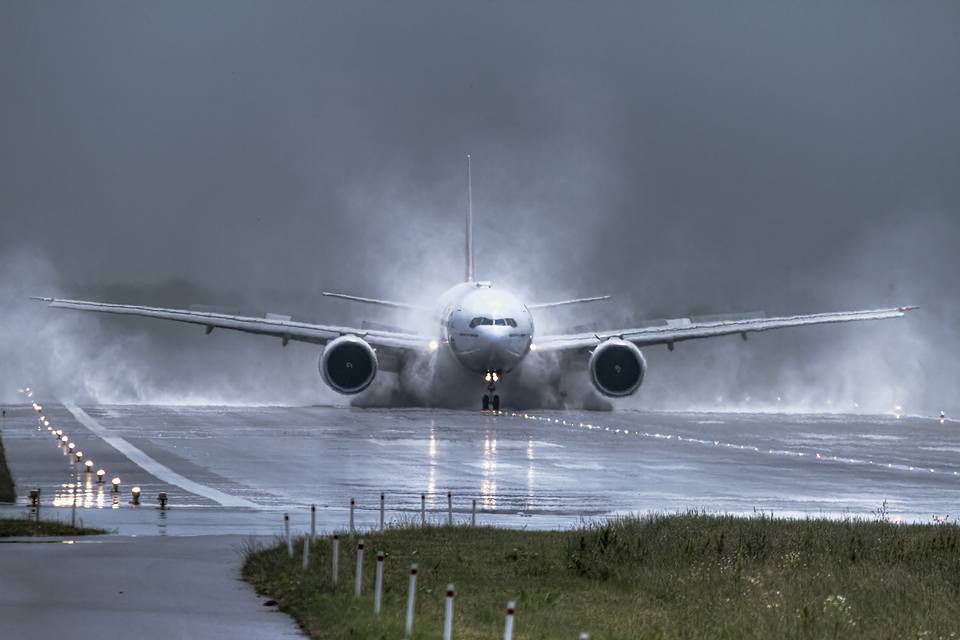
The Legal Exception That Determines Whether Airlines Must Pay
When a flight is delayed or cancelled in Europe, passengers often hear one phrase in the airline’s response: “extraordinary circumstances.” For many travelers, those two words determine whether they receive up to €250, €400, or €600 in compensation — or nothing at all.
Under EU Regulation 261/2004 (commonly known as EU261), airlines must compensate passengers for long delays, cancellations, and denied boarding in many situations. However, the regulation includes an important exception: if the disruption was caused by extraordinary circumstances beyond the airline’s control, compensation is not required.
But what exactly qualifies as “extraordinary”? And why does this definition cause so much controversy?
The Legal Basis of Extraordinary Circumstances
EU261 applies to flights departing from the European Union, as well as flights arriving in the EU operated by EU-based airlines. The regulation establishes clear compensation amounts depending on flight distance and delay length.
However, Article 5(3) of EU261 provides an exception. Airlines are not obligated to pay compensation if they can prove that the delay or cancellation was caused by extraordinary circumstances that could not have been avoided even if all reasonable measures had been taken.
This wording places the burden of proof on the airline. It must demonstrate two things:
- The event was extraordinary (outside normal operations).
- The airline took all reasonable steps to prevent or minimize the disruption.
If both elements are satisfied, compensation may be lawfully denied.
Severe Weather Conditions
One of the most widely accepted extraordinary circumstances is severe weather.
Examples include:
- Snowstorms that close runways
- Hurricanes or extreme winds
- Volcanic ash clouds
- Dense fog preventing safe landing
Aviation authorities may restrict or shut down airspace in such cases. Since airlines cannot control weather systems, courts generally recognize these situations as extraordinary.
However, minor weather disruptions — such as routine rain or manageable winds — may not automatically qualify. The severity and impact on flight safety are key factors.
Air Traffic Control Restrictions
Air traffic control (ATC) decisions can significantly disrupt flight schedules. If ATC imposes restrictions due to congestion, strikes, or safety concerns, airlines may be unable to operate flights as planned.
ATC strikes in particular have triggered widespread cancellations across Europe in recent years. Courts often consider national air traffic control strikes to be extraordinary because they fall outside the airline’s operational control.
That said, internal airline staffing issues — such as crew shortages — are generally not treated the same way.
Political Instability and Security Risks
Events such as sudden airport closures due to political unrest, security threats, or acts of terrorism are also typically classified as extraordinary.
For example:
- Armed conflict near an airport
- Government-imposed travel bans
- Security lockdowns
- Emergency evacuations
In these cases, airlines cannot reasonably be expected to operate flights safely.
The COVID-19 pandemic also raised complex questions. Government-imposed travel restrictions and border closures were widely treated as extraordinary circumstances, though disputes arose in some cases regarding refund versus compensation rights.
Technical Problems: The Most Disputed Category
Technical faults are one of the most contested areas in EU261 disputes.
European Court of Justice (ECJ) rulings have clarified that routine technical problems are generally not extraordinary. Aircraft require maintenance, and mechanical failures are considered part of normal airline operations.
For example:
- Engine component wear
- Hydraulic system issues
- Routine part replacement
These are typically viewed as operational risks that airlines must manage.
However, hidden manufacturing defects, sabotage, or damage caused by external objects (such as bird strikes) may qualify as extraordinary. The distinction often depends on whether the issue is inherent in regular operations or truly outside the airline’s control.
Bird Strikes and External Damage
Bird strikes are often cited as extraordinary circumstances. If a bird collides with an aircraft and causes damage requiring inspection or repair, courts have frequently ruled in favor of airlines.
Similarly, damage caused by foreign object debris (FOD) on the runway may qualify, provided the airline could not have prevented it.
However, the airline must still demonstrate that it acted reasonably afterward — for example, by attempting to provide alternative aircraft or minimize delay.
Airline Strikes vs. External Strikes
Labor disputes present another complex area.
Strikes by airport staff, ground handlers, or air traffic controllers are usually considered extraordinary. Airlines typically have limited control over these external actors.
But internal airline staff strikes — such as pilot or cabin crew walkouts — are treated differently. European courts have ruled that internal strikes linked to employment conditions may not automatically qualify as extraordinary, especially if they relate to management decisions.
In such cases, airlines may still be required to pay compensation.
The “All Reasonable Measures” Test
Even if an event is classified as extraordinary, the airline must prove that it took all reasonable measures to avoid or reduce the delay.
This could include:
- Deploying reserve aircraft
- Re-routing passengers
- Adjusting crew schedules
- Providing alternative transport
If an airline simply cancels a flight without attempting mitigation, courts may find that the second condition of Article 5(3) has not been met.
The burden of proof remains with the airline throughout the process.
Why So Many Disputes Arise
The phrase “extraordinary circumstances” may sound clear in theory, but in practice, interpretation varies.
Passengers often receive brief statements such as:
“Your flight was delayed due to extraordinary operational circumstances beyond our control.”
Without detailed explanation, it can be difficult to assess whether the reason is legally valid.
Consumer advocates argue that lack of transparency contributes to confusion. Some passengers accept the explanation without further inquiry, while others escalate the case to national enforcement bodies or court.
National Enforcement and Court Decisions
Each EU member state has a national enforcement body responsible for overseeing EU261 compliance. However, enforcement intensity varies.
Many disputes ultimately rely on case law from the European Court of Justice. Over time, the ECJ has narrowed the scope of what qualifies as extraordinary, particularly regarding technical faults.
Even so, individual cases depend heavily on evidence and documentation.
What Passengers Should Know
Travelers who believe their claim was rejected incorrectly can:
- Request detailed written explanations
- Ask for technical reports if mechanical issues are cited
- File complaints with national enforcement authorities
- Pursue small-claims court if necessary
Keeping boarding passes, delay notifications, and written communication is crucial.
Understanding that not every disruption qualifies as extraordinary is equally important. Airlines cannot rely on general statements alone; they must justify their decision under EU law.
A Legal Exception Under Ongoing Scrutiny
The extraordinary circumstances clause was designed to balance passenger protection with operational reality. Aviation involves risks beyond human control, and airlines cannot be held liable for every disruption.
Yet critics argue that the clause is sometimes interpreted too broadly, potentially weakening passenger rights.
As air travel continues to expand and disruptions remain common, the legal definition of extraordinary circumstances will likely remain at the center of compensation disputes.
For passengers, the key takeaway is simple: the phrase “extraordinary circumstances” is not the final word — it is the beginning of a legal question that can, and sometimes should, be challenged.
 English (USA)
 English (UK)
 Français
 Português (Portugal)
 Shqip
Shqip
 العربية
 Български
 Čeština
 Dansk
Dansk
 Deutsch
 Deutsch (Österreich)
 Deutsch (Schweiz)
 English (Canada)
 English (Ireland)
 Español
 Ελληνικά
 Magyar
 Italiano
 Nederlands
 Norsk
Norsk
 Polski
 Português (Brasil)
 中文
中文
 Türkçe