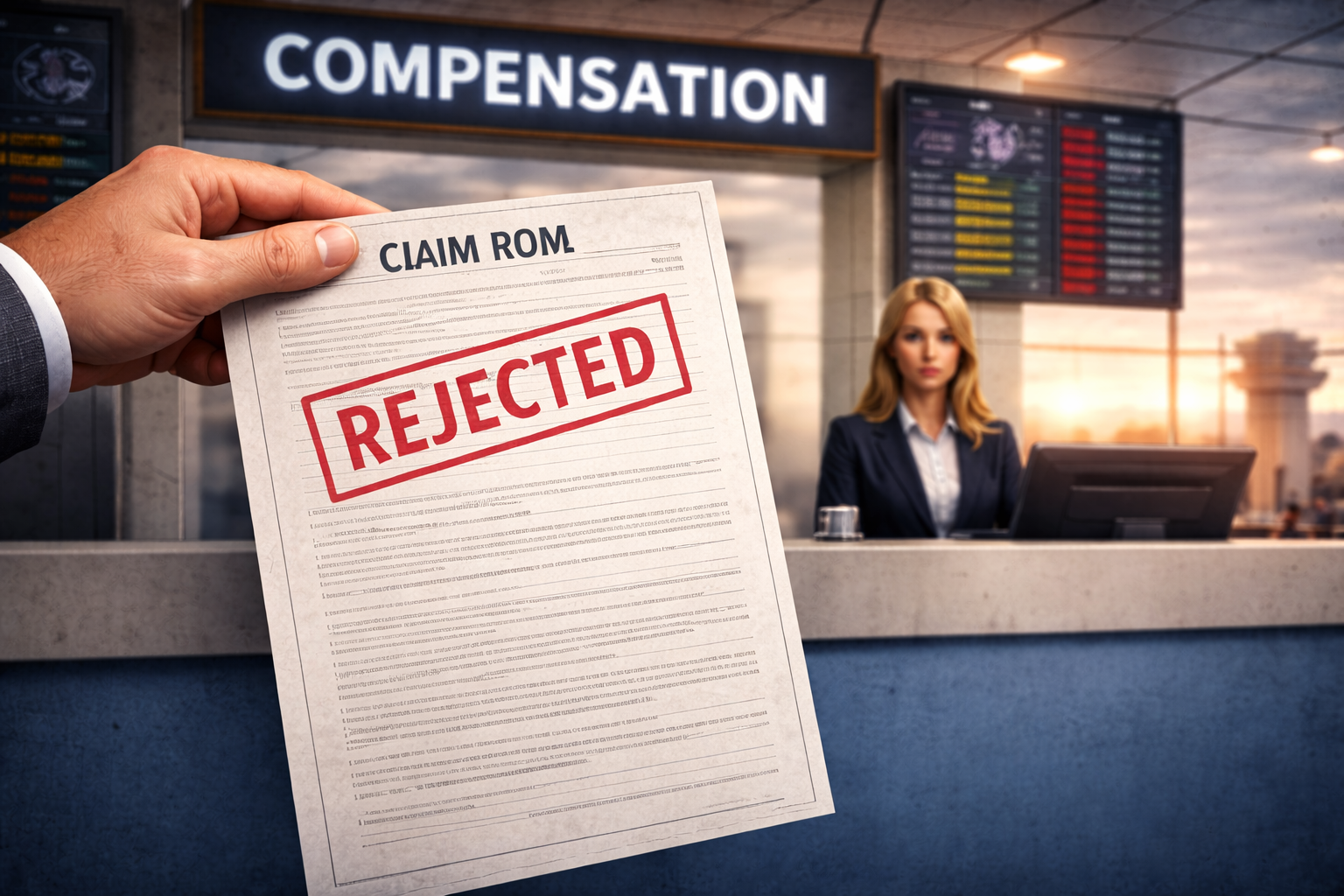
The Tactics Behind Delayed and Cancelled Flight Claims
Every year, millions of passengers across Europe experience delayed or cancelled flights. Under regulations such as EU261 and UK261, travelers may be entitled to compensation of up to €600 in certain circumstances. Yet despite clear legal frameworks, a large number of eligible passengers never receive a payout. Industry observers and passenger-rights advocates say that airlines often rely on a combination of legal loopholes, procedural complexity, and passenger fatigue to reduce or avoid compensation payments.
This investigative-style report explores the most common tactics airlines use — and why so many claims quietly disappear.
The “Extraordinary Circumstances” Defense
One of the most frequently used strategies is invoking “extraordinary circumstances.” Under EU261, airlines are not required to pay compensation if the delay or cancellation was caused by events beyond their control, such as severe weather, political instability, security risks, or air traffic control strikes.
However, the interpretation of what qualifies as extraordinary is often contested. Technical faults, crew shortages, and operational issues are typically considered the airline’s responsibility. Still, passengers frequently report receiving standardized responses stating that their disruption was caused by extraordinary circumstances — without detailed explanation.
Consumer advocates argue that airlines sometimes apply this defense broadly, knowing that only a small percentage of passengers will challenge the decision in court.
Complex Claim Processes
Another common barrier is procedural complexity. Filing a compensation claim may appear simple at first glance, but the process can quickly become frustrating:
- Long online forms requesting flight numbers, booking codes, and boarding passes
- Requests for additional documentation
- Delayed responses stretching into weeks or months
- Automated replies that lack case-specific details
Some airlines require passengers to submit claims exclusively through web portals rather than email or phone, limiting personal interaction. When responses are delayed or unclear, many travelers abandon the claim altogether.
Experts describe this as a “friction strategy” — making the process inconvenient enough that only the most persistent passengers follow through.
Delayed Responses and Legal Deadlines
Timing plays a critical role in compensation cases. In many jurisdictions, passengers have a limited period to initiate legal proceedings if their claim is denied.
Airlines sometimes respond slowly to initial complaints, which can discourage passengers or cause confusion about next steps. While there is no evidence that airlines systematically violate legal deadlines, the extended back-and-forth can lead to claim fatigue.
Passengers who are unaware of their rights may assume that a delayed response means their case has been rejected permanently.
Reclassifying the Reason for Disruption
In certain cases, passengers have reported receiving different explanations for the same disruption at different stages of the claim process.
For example, a flight initially described as delayed due to a “technical issue” might later be categorized as affected by “operational constraints linked to air traffic control.” The classification matters because it can determine whether compensation is payable.
Legal experts note that accurate classification is essential. However, the complexity of aviation operations can make it difficult for passengers to independently verify the true cause of a delay.
Offering Vouchers Instead of Cash
Airlines sometimes offer travel vouchers as an alternative to cash compensation. While vouchers may be convenient for frequent travelers, they can include restrictions, expiration dates, or blackout periods.
Passengers are not obligated to accept vouchers if they prefer monetary compensation. However, some travelers may accept the voucher offer without realizing they are entitled to a cash payment under the law.
Consumer groups emphasize that informed consent is key — passengers should understand the value and conditions of any alternative offer before agreeing.
Relying on Passenger Inaction
Perhaps the most significant factor is simple inaction. Studies suggest that a large percentage of eligible passengers never file a claim at all.
Reasons include:
- Lack of awareness of compensation rights
- Assumptions that the airline will reject the claim
- Belief that the process is too complicated
- Small group travel where responsibility for filing is unclear
Airlines benefit indirectly when passengers do not pursue claims. In this sense, public awareness plays a crucial role in the effectiveness of compensation regulations.
Settlements Without Admission
When cases escalate to court or alternative dispute resolution bodies, airlines may choose to settle without admitting liability. While this can result in compensation for the passenger, it avoids a formal ruling that could set a broader precedent.
Legal analysts note that individual settlements limit the development of case law that might otherwise clarify passenger rights for future disputes.
The Role of Claim Agencies
The rise of “no win, no fee” claim agencies has shifted the landscape. These companies handle the claim process on behalf of passengers, typically taking a percentage of the compensation.
Airlines have criticized the fees charged by such firms, while supporters argue that they provide access to justice for passengers who lack time or legal knowledge.
Some airlines require additional verification steps when dealing with third-party agencies, potentially prolonging the process further.
Regulatory Oversight and Enforcement
National enforcement bodies oversee passenger rights regulations, but enforcement varies by country. While regulators can issue fines or guidance, compensation disputes are often treated as civil matters between passenger and airline.
This decentralized system can create inconsistencies. In some jurisdictions, enforcement is more proactive; in others, passengers may need to rely on court proceedings to secure payment.
What Passengers Can Do
Experts recommend several practical steps for passengers seeking compensation:
- Keep all documentation, including boarding passes and delay notifications.
- Request written confirmation of the reason for the disruption.
- Submit claims promptly and keep copies of correspondence.
- Escalate to national enforcement bodies or small-claims court if necessary.
- Be cautious about accepting vouchers without understanding alternatives.
Understanding the regulatory framework — including eligibility criteria and time limits — is essential.
A System Under Scrutiny
Airlines operate in a complex and highly regulated industry where disruptions can result from multiple interconnected factors. At the same time, compensation laws are designed to protect passengers from avoidable inconvenience.
The tension between operational realities and legal obligations has led to ongoing debate. Consumer advocates call for clearer enforcement and greater transparency, while airlines argue that extraordinary events and capacity constraints must be fairly considered.
As air travel continues to grow, the question remains: will regulatory reforms strengthen passenger protections, or will compensation disputes remain a battle of persistence?
For now, one thing is clear — awareness, documentation, and persistence significantly increase the chances of a successful claim.
 English (USA)
 English (UK)
 Français
 Português (Portugal)
 Shqip
Shqip
 العربية
 Български
 Čeština
 Dansk
Dansk
 Deutsch
 Deutsch (Österreich)
 Deutsch (Schweiz)
 English (Canada)
 English (Ireland)
 Español
 Ελληνικά
 Magyar
 Italiano
 Nederlands
 Norsk
Norsk
 Polski
 Português (Brasil)
 中文
中文
 Türkçe