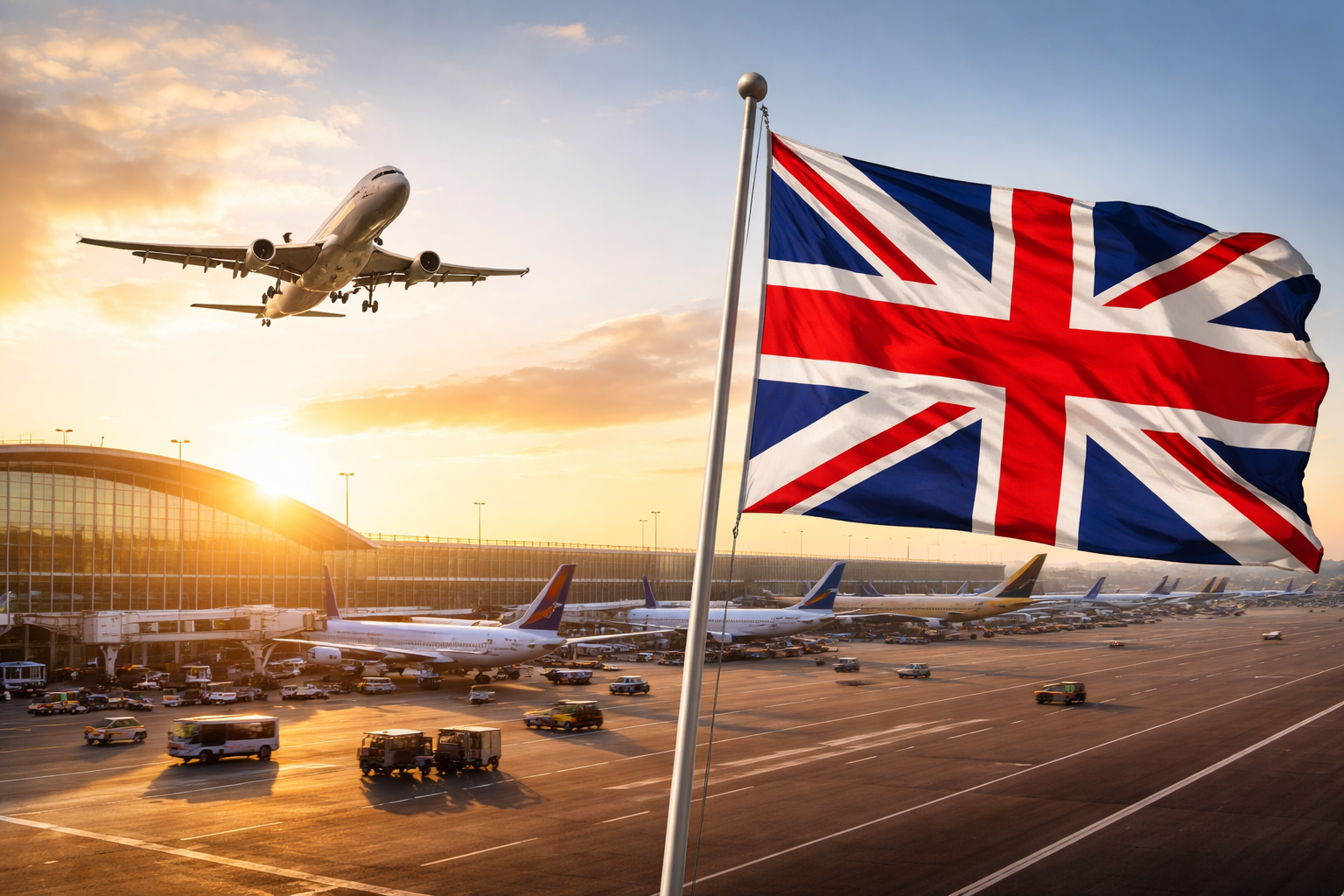
When a flight is delayed or cancelled, most passengers focus on one question: “Can I claim compensation?” In Europe and the United Kingdom, the answer often depends on two closely related regulations — EU261 and UK261. At first glance, they appear almost identical. In reality, they are twin systems born from the same legal framework but operating under different jurisdictions since Brexit.
EU261, formally known as Regulation (EC) No 261/2004, has long been the cornerstone of passenger rights across the European Union. It guarantees compensation of up to €600 for significant delays, cancellations, and denied boarding, provided the disruption was within the airline’s control. For years, UK travelers benefited from this protection as part of EU law.
What Changed in 2021?
When the United Kingdom formally left the European Union, EU legislation no longer applied directly. To avoid weakening passenger rights, the British government incorporated the substance of EU261 into domestic law. The result was UK261 — a near mirror of its European predecessor.
So, what is the real difference?
The most significant distinction lies in geographic scope. EU261 covers flights departing from EU airports, regardless of airline nationality, and flights arriving in the EU when operated by an EU-based carrier. UK261, on the other hand, applies to flights departing from UK airports and to flights arriving in the UK when operated by a UK airline.
In practical terms, a passenger flying from London to Rome falls under UK261. A passenger flying from Rome to London on an Italian airline falls under EU261. The departure point — and sometimes the airline’s nationality — determines which legal regime applies.
How Much Can You Get?
Another difference is currency. Under EU261, compensation is set in euros: €250, €400, or €600 depending on flight distance. Under UK261, compensation amounts are expressed in pounds sterling. While broadly aligned in value, exchange rate fluctuations can mean slight differences in the final payout.
Enforcement mechanisms have also diverged. Within the EU, National Enforcement Bodies in each member state oversee compliance. In the UK, the Civil Aviation Authority (CAA) and approved Alternative Dispute Resolution bodies handle complaints. This means the legal pathway for unresolved claims differs, even though the rights themselves remain strikingly similar.
When Are You Eligible?
Importantly, eligibility rules have not changed. Under both EU261 and UK261, passengers are typically entitled to compensation if they arrive at their final destination more than three hours late due to reasons within the airline’s control. Extraordinary circumstances — such as severe weather or air traffic control restrictions — remain valid exemptions.
Industry experts note that, despite political separation, the UK chose regulatory continuity over divergence. Passenger protections were preserved rather than diluted. For airlines operating across both jurisdictions, compliance requirements remain largely familiar.
What Travelers Should Know
For travelers, the key takeaway is simple: your rights remain strong — but you must identify which regulation applies to your specific flight. Check where your journey started, consider the airline operating the service, and direct your claim accordingly.
In a post-Brexit aviation landscape, EU261 and UK261 now stand as parallel systems. They share the same DNA, the same compensation philosophy, and nearly identical passenger protections. The difference lies not in the strength of the rights, but in the borders that define them.
 English (USA)
 English (UK)
 Français
 Português (Portugal)
 Shqip
Shqip
 العربية
 Български
 Čeština
 Dansk
Dansk
 Deutsch
 Deutsch (Österreich)
 Deutsch (Schweiz)
 English (Canada)
 English (Ireland)
 Español
 Ελληνικά
 Magyar
 Italiano
 Nederlands
 Norsk
Norsk
 Polski
 Português (Brasil)
 中文
中文
 Türkçe